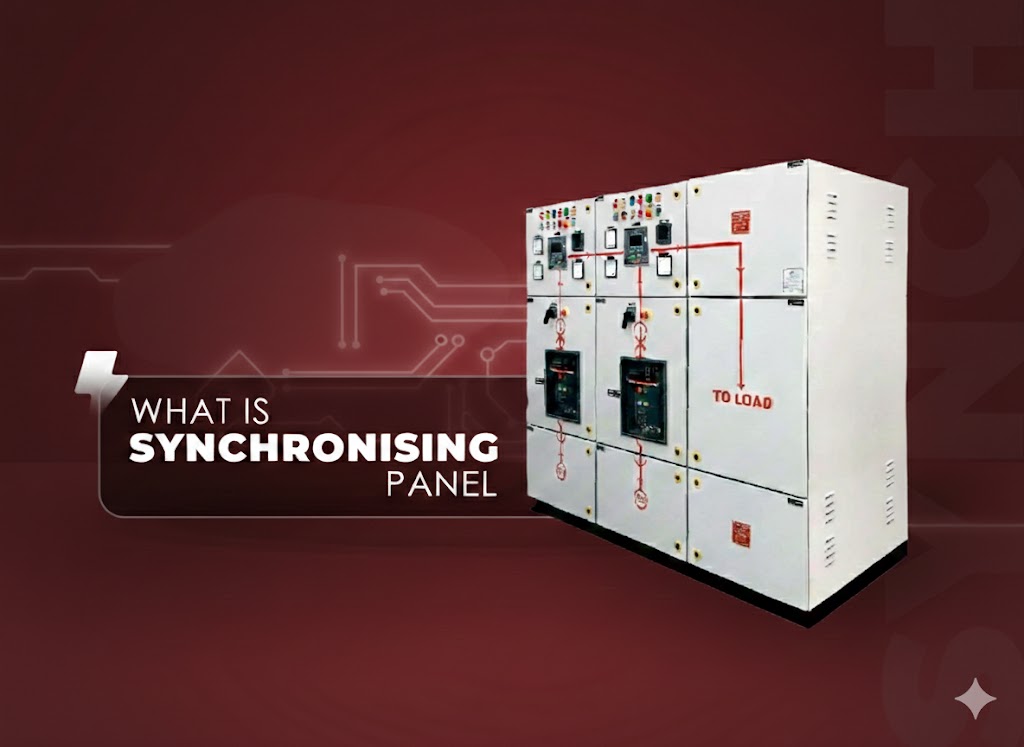
A synchronizing panel, also known as a synchronization panel, is a specialized control panel used in electrical systems to ensure the safe and efficient operation of multiple power sources. It enables synchronization between generators or between a generator and the power grid, ensuring a stable and reliable power supply.
A synchronizing panel works by matching the following parameters of multiple power sources before they are connected in parallel :
Ensuring the voltages of all sources are equal.
Synchronizing the frequencies to avoid fluctuations.
Aligning the phase sequence of each source correctly.
Matching the phase angle to ensure smooth power transfer.
Synchronizes multiple diesel generators for uninterrupted power.
Ensures seamless power supply from backup generators.
Helps manage synchronization with the grid for efficient power transfer.
Manages multiple power sources to handle peak loads.
Operates in both manual and automatic modes.
Distributes load among multiple generators efficiently.
Prevents faults such as overvoltage, phase mismatch, and frequency variation.
Allows real-time tracking and management of power sources.
Reduces power fluctuations and blackouts.
Balances power demand dynamically.
Distributes power according to load requirements.
Operates generators only when needed, reducing fuel costs.
A synchronizing panel is an essential component for industries and facilities requiring multiple power sources to work together efficiently. By ensuring seamless synchronization and load sharing, it enhances system reliability, safety, and cost-effectiveness.